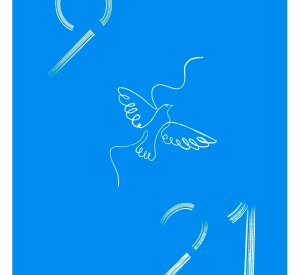
Shape the Future: A Typographic Campaign for Voter Participation
Posted

Icie Wallace, Typography Class (ART-3325), Troy University
1st Place Winner of the 2024 Shape the Future Campaign Competition

Kaleyah Gilbert, Typography Class (ART-3325), Troy University
2nd Place Winner of the 2024 Shape the Future Campaign Competition

Xiaodie Wang, Typography Class (ART-3325), Troy University
3rd Place Winner of the 2024 Shape the Future Campaign Competition

Hannah Brown, Typography Class (ART-3325), Troy University

Isabella Stokes, Typography Class (ART-3325), Troy University
| Educator/s: | Thiffany Belda |
|---|---|
| Institution: | Troy University |
| Level: | Advanced, Senior, Undergraduate |
| Duration: | 6 weeks |
| Category: | Graphic Design, Print, Social Innovation, Typography, Visual Communication |
| Filed Under: | BA Program, Campaign, Community, Culture, Design for Democracy, Education, Four-year Program, Participatory, Poster, Printed Matter, Social Impact |
| Bookmark Project | |
Project Brief
A communication design project where students develop strategic, audience-focused campaigns that translate research, messaging, and visual systems into persuasive multi-platform design outcomes.
Design plays an important role in shaping public awareness and encouraging civic participation. Campaign graphics, public posters, and social media visuals often serve as the bridge between information and action.
In the Shape the Future Project, students design a visual campaign encouraging voter participation while remaining politically neutral. The project challenges students to communicate the importance of voting without promoting a specific candidate or political party.
Students begin by researching audiences and developing campaign messaging that motivates participation in democratic processes. They then translate that message into a cohesive visual campaign that may include posters, social media graphics, and promotional materials.
The assignment emphasizes how design, typography, layout, and visual tone influence the effectiveness of public messaging. Through the development of a multi-piece campaign, students explore how design can support civic engagement while maintaining clarity, accessibility, and persuasive impact.
PROJECT STRUCTURE
The assignment unfolds through several stages that guide students from research to final campaign execution.
CAMPAIGN RESEARCH & MESSAGING
Students begin by identifying a target audience and developing the written messaging for their campaign. This includes creating:
- campaign slogans or taglines
- supporting body copy
- a word bank of related ideas and phrases
Students are encouraged to focus on messages that emphasize civic responsibility, community participation, and the long-term impact of voting.
CONCEPT DEVELOPMENT
Students develop moodboards that explore potential visual directions for their campaign, including:
- typographic tone
- color palettes
- graphic styles
- reference imagery
This stage also includes the creation of mind maps and collage explorations to help students develop visual themes.
ITERATIVE SKETCHING
Students produce an extensive set of 50-100 thumbnail sketches, exploring variations in layout, typography, and composition.
This process reinforces the idea that strong campaign graphics emerge through repeated experimentation rather than a single initial concept. Furthermore, by iterating with pencil and paper, creativity is not hampered by the need to “get it right”, “do it perfect” or get caught in what the software/app allows you to do rather than what you can creatively do.
MID-PROJECT PRESENTATION
Students present their research, moodboards, typography choices, and 4 refined sketches in a in-class presentation for critique. This checkpoint helps students refine their visual direction before beginning digital production.
FINAL CAMPAIGN DEVELOPMENT
Students translate their concepts into digital designs using Adobe Illustrator. Each student produces 2 final campaign posters that demonstrate a cohesive typographic and visual system.
The designs are created at 8 × 8 inches with a 300 DPI resolution, allowing the artwork to be scaled to large-format applications such as banners or public displays, but the final application remains a poster. Students are also tasked with developing collateral design assets of their choosing — buttons, T-shirts, bracelets, bus wraps, etc.
Learning Objectives
- Explore the role of design in civic communication and public engagement
- Develop campaign messaging and typographic voice
- Practice designing a cohesive visual system across multiple deliverables
- Strengthen iterative design thinking through large-scale sketch exploration
- Learn to translate research and messaging into clear visual communication
Deliverables
Students complete a comprehensive campaign package including:
- Campaign message and written copy
- Word bank and concept research
- Moodboard and collage explorations
- 50-100 thumbnail sketches demonstrating layout exploration
- Four refined final sketches
- Typography tile and color palette documentation
- 2 final campaign designs
- Contextual mockups showing the campaign in real-world environments
- A detailed process book documenting the entire design journey
- Collateral design assets such as buttons, T-shirts, bracelets, bus wraps, etc.
Students also present their campaign in a 5–10 minute presentation, explaining their design strategy, audience considerations, and intended impact.
Readings/Resources
- Video | Art of the Campaign: The Politics of Color Theory https://youtu.be/ca5mkwPn23g?si=xbFZNidwFzBHye34
Reflections
Assignments centered on civic communication allow students to see how design functions beyond aesthetic concerns. Projects like Shape the Future introduce students to the idea that design and typography can play an important role in public dialogue.
Because the assignment requires students to communicate a politically neutral message, they must focus on clarity, tone, and accessibility rather than persuasion tied to a specific viewpoint. This constraint encourages thoughtful design decisions and careful consideration of audience perception.
The extensive sketching phase is also central to the pedagogy of the project. Producing fifty to one hundred thumbnails pushes students to explore a wide range of possibilities and reinforces the importance of iteration in professional design practice.
Through this process, students gain experience balancing research, messaging, and visual execution, skills that are essential when designing for social campaigns and public communication.
RECOGNITION & IMPACT
Student work created through this assignment has been selected for exhibition in student showcases, around campus and displayed at the Trojan Center in partnership with the Office of Civic Engagement voter registration tables. The project and the campaign posters have also been featured in university media coverage, including the campus newspaper and in interviews with the university television channel.
These recognitions and direct civic engagement provide students with early opportunities to present their work publicly and demonstrate how classroom projects can contribute to conversations beyond the classroom environment.
EDUCATOR'S PORTFOLIO: https://www.tbelda.com/